

Gondwana Collection: Lodges in Namibia
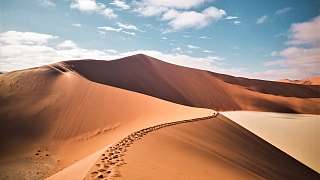
Namibia, as intensely as you could hardly experience it anywhere else. Endless expanses, wild animal worlds and the spectacular dunes of the Namib – with Gondwana Collection you can discover Africa's fascinating landscapes in complete relaxation and in your very own way. In authentic lodges, in special locations and with genuine Namibian hospitality.
Sustainable & exclusive Luxurious experiential accommodation
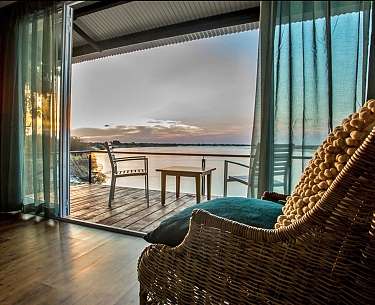
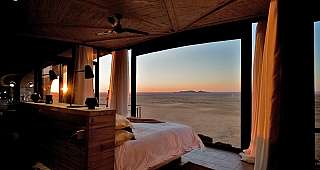
Our partner Gondwana Collection Namibia welcomes you with more than 20 individual, sustainably operated luxury accommodations and lodges, which are located in the immediate vicinity of Namibia's spectacular sights. The ideal starting point for your safari adventure in Africa! Observe wild animals, learn more about the culture and history of Namibia, and collect unforgettable memories.
Explore Namibia Top rental cars for self-drive
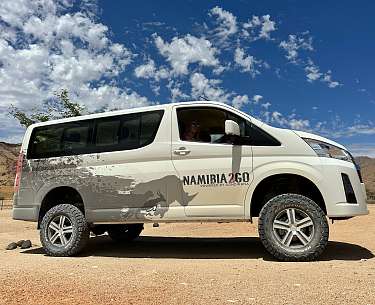
Would you like to explore Namibia on your own? The Namibia2Go car hire from Gondwana Collection enables you to enjoy a safe and straightforward self-drive trip with top-class hire vehicles for every need. Excellent extra services such as internet access and the hire of high-quality camera equipment ensure that you can share your Namibia highlights with family and friends at any time.
Travel Planning
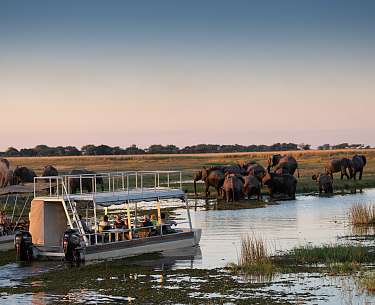
The Gondwana Travel Centre is eager to make your dream of the perfect African adventure a reality! Specialising in safaris and tailored trips throughout Namibia and southern Africa, Gondwana customises your itinerary to your preferences, offering accommodations, attractions, and leisure activities tailored just for you. Explore Namibia your way with Gondwana Travel Centre.
Tours & Safaris
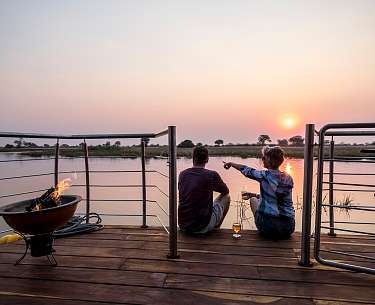
Experience Namibia in a particularly intense and authentic way on an exciting self-drive tour. With Gondwana Collection's various all-inclusive safari packages, you can travel safely and independently through Namibia, immersing yourself in the vastness of nature and encountering its fascinating wildlife up close. Feel the heartbeat of Africa on this journey tailored to your preferences.
Discover Lodges & Camps in Namibia


Your Journey starts here
FAQ Questions & Answers
The best time to travel to Namibia is usually between May and October. In these dry months, temperatures are pleasant and vegetation is sparse: ideal conditions for wildlife viewing, especially in Etosha National Park. The months from November to April are warmer and can bring rain, but the landscape is then particularly green and vibrant.
For a first trip to Namibia, at least 10 to 14 days is recommended. This makes it possible to combine highlights such as Windhoek, the Namib Desert, Sossusvlei, Swakopmund and the Etosha National Park without having to cover long distances every day. If you have more time, you can relax and extend the trip to three weeks or longer.
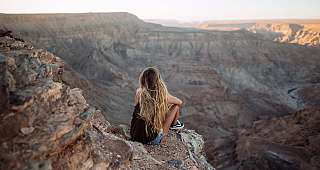
Among the best-known highlights are Windhoek, Sossusvlei, Swakopmund, the coast near Walvis Bay, Etosha National Park and Kolmanskop. Depending on the route, the Fish River Canyon, Damaraland and the Caprivi Strip are also options. The ideal combination depends on whether the focus is more on landscapes, wildlife viewing, culture or relaxation.
Away from the well-known classics, numerous less-visited places await. These include, for example, Damaraland, the Kaokoveld, the Caprivi Strip or the region around Lüderitz. It is especially the more remote landscapes that make Namibia so appealing: vast expanses, little traffic and intense nature experiences.
The most famous dunes in Namibia are located around Sossusvlei in the Namib-Naukluft National Park. The huge red sand dunes around Deadvlei and Sossusvlei are among the most spectacular landscapes in the country. The dunes around Walvis Bay and Sandwich Harbour are also impressive and can be easily combined with a stay on the coast.
German nationals require a visa for Namibia for tourist travel. Since April 2025, this can be applied for as a Visa on Arrival; alternatively, prior online application is possible. For entry, a passport is required that is still valid for at least six months on arrival and has at least three blank pages. The tourist visa can generally be issued for up to 90 days. As entry requirements can change at short notice, the current regulations should be checked again before travel.
English is the official language of Namibia and is used nationwide for communication. In addition, numerous local languages are spoken, including Oshiwambo, Khoekhoegowab and various Bantu and Khoisan languages. German and Afrikaans are also still partly in use.
The official currency is the Namibian Dollar (NAD). It is pegged 1:1 to the South African Rand, which is also accepted as a means of payment in Namibia. Credit cards are accepted in many hotels, lodges and shops, but cash is also recommended for remote regions and smaller expenses.
Alongside light, breathable clothing, sunscreen, sunglasses, headwear, sturdy shoes and a reusable water bottle should be in your luggage. For safaris, clothing in neutral colours is recommended, and for the cooler morning and evening hours a warm layer. A torch, power bank and travel first-aid kit can also be very helpful, especially when staying in remote areas.
In most towns and lodges, tap water is generally safe to drink. However, in remote regions, water quality can vary. On self-drive trips, you should therefore always carry enough drinking water with you. Namibia is a very dry country - so careful and economical use of water is correspondingly important.
For direct entry from Germany, no compulsory vaccinations are generally required. An exception may apply if travellers are entering from a yellow fever area or have previously been there. Regardless, it is advisable to check your general vaccination protection before travelling and to seek individual travel medicine advice.
Yes, malaria occurs regionally in Namibia, particularly in the north and north-east of the country and depending on the time of year. The risk is significantly lower in the south and in the dry desert regions. Mosquito protection is therefore advisable; whether additional medicinal malaria prophylaxis is appropriate should be discussed individually with a doctor or tropical medicine specialist.
Namibia is generally considered a safe and easy country to travel in, nevertheless a few precautions should be observed. Valuables should not be displayed openly and vehicles should not be left unattended with luggage inside. Special caution is required on long-distance drives: gravel roads, wildlife crossings and long distances can make driving demanding. Driving after dark is not recommended. Travellers should also plan for sufficient water and fuel.
Yes, Namibia is very well suited to a self-drive trip. The country has a well-developed road network, although many routes are on gravel roads. What is important is to drive defensively, allow enough time for the sometimes long distances, and prepare the route well in advance. Especially on remote stretches, fuel stops and overnight stays should be planned ahead.
Not for every trip to Namibia. Many main roads and gravel roads can be driven on with a normal vehicle. However, for remote regions, more demanding tracks, or certain lodges and camps, a 4x4 vehicle can be sensible or even required. The planned route and the respective road conditions are therefore decisive.
Both have their own appeal. Camping offers a particularly immediate nature experience and a great deal of freedom, while lodges provide more comfort, service and often an exceptional location. After long drives in particular, a lodge with a comfortable room, pool and good food can be a welcome break. Anyone wishing to experience Namibia in a particularly relaxed way can also combine both styles of travel.
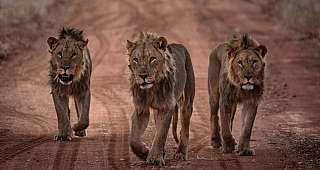
Namibia is known for its impressive wildlife. In Etosha National Park, you can observe elephants, lions, giraffes, zebras, rhinoceroses, springboks and oryx, among others. With a bit of luck, you may also encounter leopards or cheetahs. Which animals you see depends greatly on the region, the season and the respective waterholes.
For wildlife viewing, the dry months from May to October are particularly suitable. As many animals gather at the few remaining waterholes then, the chances of exciting sightings are especially good. The cooler temperatures also make longer game drives pleasant.
Three days can be quite enough for a first safari impression. However, anyone who wants to observe as many animals as possible and get to know different regions or waterholes should plan for four to five days or more. What matters is not just the duration, but also the location of the accommodation and the quality of the guided game drives.
On safari, the main thing is: keep your distance, stay calm and follow the guides' instructions. Animals should never be fed or deliberately lured closer. Caution is also required outside the vehicle, as wild animals may be nearby at any time. Binoculars, sun protection and plenty of water are part of the basic kit.
On a jeep safari, larger areas can be explored and shy or more distant animals can also be observed. A walking safari, on the other hand, offers a particularly intense nature experience: tracks, plants and smaller animals move more into focus. Which option is more suitable depends on the desired experience and the region in question.
Yes, many safaris and lodges are also suitable for families. However, different age restrictions apply depending on the accommodation and activity. For families with younger children, shorter game drives and family-friendly lodges are often the best choice. On walking safaris, stricter age requirements often apply.
The best choice is light, breathable clothing in neutral colours such as beige, khaki or brown. For early game drives and the cooler winter months, a warm jacket should also be planned for. In the desert, good sun protection, sturdy footwear, sunglasses and a head covering are also important.